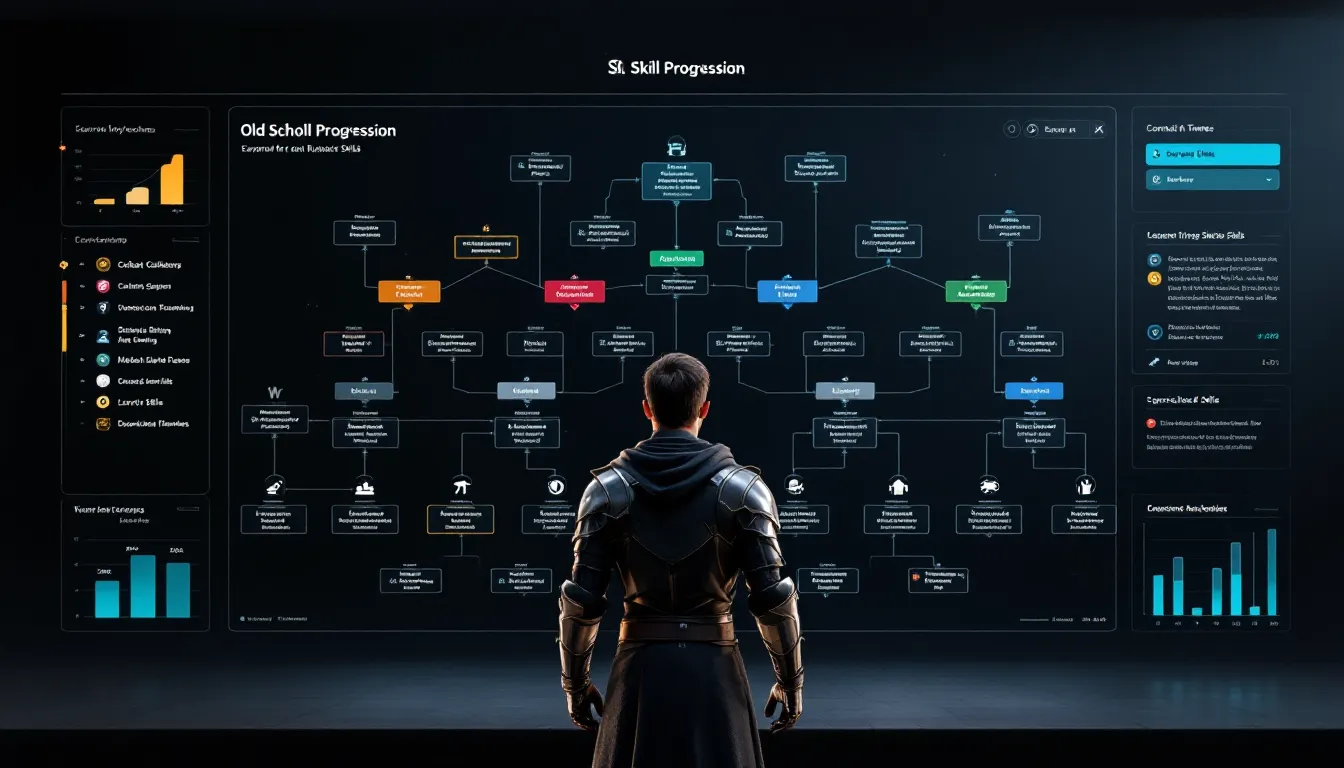
Old School RuneScape’s depth comes from its expansive skill system, a mechanic that separates casual players from dedicated grinders. Unlike most MMOs where progression feels linear, OSRS skills reward diverse playstyles. Whether someone’s flipping stakes at the duel arena or grinding Slayer for loot, understanding the skill system is fundamental to long-term success. This guide breaks down all 23 OSRS skills, explains how leveling works, and provides actionable strategies to level faster. The right approach transforms grinding from tedious to efficient, unlocking endgame content and wealth in the process.
Table of Contents
ToggleKey Takeaways
- OSRS skills form an interconnected progression system where 23 distinct skills reward diverse playstyles, from AFK gathering to optimized combat grinding.
- Combat skills (Attack, Strength, Defense, Ranged, Magic) anchor early progression, while Slayer unlocks endgame content and generates wealth simultaneously through rare drops worth millions.
- Gathering skills like Mining, Fishing, and Woodcutting build wealth passively while training; Motherlode Mine at 60 Mining and Barbarian Fishing at 48 offer optimal experience-to-profit ratios.
- High-level Herblore (85+) and Runecrafting (91+) transition from expensive grinds into income-generating activities that subsidize other training methods.
- Strategic skill sequencing matters more than raw hours: prioritizing Agility early (40-70) for utility, Prayer at natural breakpoints, and leaving Firemaking as a final grind maximizes overall progression efficiency.
Understanding The OSRS Skill System
How Skills Work In Old School RuneScape
OSRS operates on 23 distinct skills, each tied to specific content and progression. Unlike flat-stat systems, every skill has unique mechanics, training methods, and real utility. Players gain experience by performing actions related to each skill, swinging an axe levels Woodcutting, casting spells trains Magic, stealing from NPCs advances Thieving.
The genius of the OSRS skill system lies in its interconnectedness. Smithing ore obtained through Mining, Cooking raw fish caught while Fishing, and Crafting jewelry using materials from other activities creates an economy driven entirely by player effort. Casual players can focus on relaxing gathering activities, while those seeking maximum efficiency optimize every action for experience rates.
One critical aspect: all OSRS skills start at level 1 (except Attack, Strength, Defense, Hitpoints, and Ranged which start at 10), and progression requires consistent effort. There’s no “quick fix” to 99, though smart strategy matters far more than raw hours invested.
Experience Points And Leveling Mechanics
Each level requires progressively more experience. Level 1 to 2 requires 83 XP, but reaching 99 demands 13,034,431 total experience points. The scaling is exponential, levels 1-10 take hours, but levels 90-99 can take weeks depending on the skill’s training methods.
Experience gains vary wildly by training method. Some activities reward ~10,000 XP per hour (like high-AFK Fishing), while optimized combat methods hit 150,000+ XP per hour at endgame. The key difference comes from active versus passive training. Active training, constantly monitoring progress and making micro-decisions, delivers superior rates but demands engagement. AFK methods let players multitask but sacrifice efficiency.
Importantly, experience is accountwide and permanent. Once earned, it never resets, making alt accounts a significant investment. Most dedicated players run mains for primary grinds and alts for specific endgame content like Raids or Nightmare. Understanding the experience curve helps players prioritize: trying to grind 99 Cooking from scratch might take 20-30 hours, whereas 99 Herblore could demand 150+ hours depending on method.
Combat Skills: Melee, Range, And Magic
Attack, Strength, And Defense Progression
The holy trinity of melee, Attack, Strength, and Defense, anchors early-game progression for every player. Attack increases accuracy with weapons and unlocks higher-tier gear (you need 40 Attack to wield a Rune Longsword). Strength boosts melee damage output. Defense improves armor effectiveness and survival, allowing access to stronger armor sets.
Early melee training typically happens through combat with low-level enemies like Cows, Goblins, or Chickens. New players gain ~5,000-10,000 XP per hour depending on setup. The experience is tolerable but slow compared to later methods.
Mid-game melee training shifts to Slayer, which locks substantial progression behind the Slayer skill. This gating mechanic is intentional, Jagex designed it so that players develop multiple skills simultaneously. Grinding 70+ Attack, Strength, and Defense while pursuing Slayer creates natural progression and variety. Experience rates hit 40,000-60,000 XP per hour during productive Slayer tasks.
Late-game players typically use Nightmare Zone (a minigame offering AFK melee training) or continue optimized Slayer grinding. Nightmare Zone allows nearly-AFK combat at ~50,000 XP per hour with minimal attention, making it ideal for balancing OSRS with work or school. But, Slayer remains the preferred method for wealth generation alongside combat training.
Ranged And Magic Training Methods
Ranged follows a similar progression arc. Early training uses bows against low-level enemies, then transitions to Slayer for combined XP gains. Ranged excels in specific situations, some bosses demand ranged dps to tank mechanics, and PvP heavily favors ranged for kiting enemies.
Training efficiency depends on ammunition and bow choice. A shortbow with bronze arrows offers terrible experience rates (~10,000 XP/hour), but a Blowpipe with dragon darts hits 100,000+ XP per hour at endgame. The gap is massive, so early grinding is painful but necessary.
Magic training diverges from combat-focused methods because it powers spellcasting, which serves offense, defense, and utility roles. Early Magic training uses low-level spells like Bolt Spells or High-Alchemy, which provide income while training but award only 30,000-50,000 XP per hour.
Optimized Magic training at endgame uses Blizzard or Trident spells against AFK enemies like Rats or Splashing (casting spells on aggressive enemies that don’t attack back). Splashing is controversial, it’s technically AFK training requiring zero input for hours, but it’s intentionally designed by Jagex. Experience rates sit around 10,000-20,000 XP per hour but demand minimal engagement.
Later-game Magic training combines experience with income via Alching valuable items or grind-heavy PvM content like Gauntlet, which rewards 50,000-60,000 Magic XP per hour plus valuable drops.
Gathering Skills: Mining, Fishing, And Woodcutting
Optimal Routes For Efficient Resource Collection
Gathering skills, Mining, Fishing, and Woodcutting, are the backbone of OSRS’s resource economy. These AFK-friendly skills let players progress while doing schoolwork, exercise, or other IRL tasks. They’re not flashy, but they fund gear upgrades and other grinds.
Mining progresses from copper/tin (level 1) through runite/granite (85+). Early stages feel slow (~10,000 XP/hour at level 1-15), but 3-tick granite mining (an advanced technique requiring specific clicking patterns) hits 50,000+ XP per hour at level 75+. Most casual players ignore granite and stick with standard methods, accepting lower rates for reduced effort.
The power spike arrives at 60 Mining when players unlock Motherlode Mine, an AFK-friendly zone rewarding ~25,000 XP per hour with zero loss. From 60-99, Motherlode is the default, it’s relaxing, profitable, and scales to endgame experience without tedium. Dedicated players use Blast Furnace (requiring 60 Smithing and constant babysitting) to accelerate from 70-80, but most skip it.
Fishing offers multiple paths. Anchovies (1-15), Trout (15-40), and Salmon (30-58) provide progressive experience at 20,000-40,000 XP per hour depending on setup. Fly-fishing with a Fly Fishing Rod hits 50,000+ XP per hour but demands moderate activity. Barbarian Fishing (using Barbarian training) unlocks at 48 and rewards 60,000+ XP per hour with Herblore bonuses, a rare dual-skill grind.
Woodcutting mirrors Mining’s pacing. Early trees (Oaks at 15, Willows at 30) offer 10,000-30,000 XP per hour. Power-chopping (dropping logs immediately) accelerates experience but forgoes profits. At 60 Woodcutting, Teaks in Ape Atoll reward 40,000-60,000 XP per hour depending on activity level.
Critically, all three gathering skills offer an AFK-to-active spectrum. Players balance efficiency against engagement, grinding 99 Woodcutting AFK takes 150+ hours, but active methods shorten it to 80-100 hours. Top RuneScape Tips, Skills, and Strategies for 2025 emphasize this tradeoff throughout endgame planning.
Profit Potential From Gathering Activities
Gathering isn’t purely experience grind, it generates cash. Raw ore, fish, and logs sell consistently, and efficient gathering builds wealth passively.
Mining profits scale with ore type. Copper (1-10) and Tin (1-20) sell poorly, but Mithril (55+) and Adamantite (70+) move steadily at 500-1,500 GP per ore. High-level players targeting 99 purely through profitable methods use Granite (75+, ~2,500 GP per ore) for 50,000 XP per hour and substantial income.
Fishing shines for profit potential. Raw Tuna (30 Fishing, ~100 GP each) and Raw Swordfish (50 Fishing, ~300-400 GP each) sell reliably. Barb-tail Harpoon Fishing (from 62 Fishing) yields Barb-tail Harpoonfish (~150 GP each) at 40,000+ XP per hour. Raw Sharks (76 Fishing, ~700-900 GP each) create a viable income stream for mid-level players.
Woodcutting offers the strongest profit-to-experience ratio. Logs sell slowly unless processed into planks via the Sawmill or magical mahogany furniture. Mahogany (70 Woodcutting, ~800-1,200 GP) and Teak (35 Woodcutting, ~300-500 GP) generate consistent income. Grinding to 99 via Teaks generates 8-12 million GP while training.
The takeaway: gathering skills are never “wasted” time. Efficient routing maximizes both experience and profit, turning grinds into wealth-building exercises.
Processing Skills: Cooking, Smithing, And Crafting
Converting Resources Into Valuable Items
Processing skills transform raw materials into valuable finished products. This tier includes Cooking, Smithing, Crafting, and Herblore, skills that convert gathering outputs into usable or sellable goods.
Cooking trains by preparing raw food. Raw Chicken (1 Cooking), Raw Trout (15 Cooking), and Raw Swordfish (50 Cooking) become Cooked versions restoring health during combat. Training rates vary from 30,000-80,000 XP per hour depending on recipe, but Cooking’s real value emerges in Infernal Eels (91+ Cooking) offering 150,000+ XP per hour and profit simultaneously.
Early Cooking grinds toward level 30-40 for quests, then most players skip directly to Infernal Eels at 91. The mid-game gap exists because standard Cooking methods (Sharks, Swordfish) feel glacial compared to combat training.
Smithing converts ore into bars and bars into weapons/armor. Early smelting (Copper + Tin = Bronze Bar at 1 Smithing) trains slowly. At 15 Smithing, Iron Bars appear, offering 12,500 XP per hour. Iron remains viable until 70+ because it’s profitable.
The meta pivot happens at 60 Smithing: Blast Furnace allows smelting bars at 1 coal per 3 ore instead of standard ratios. Smelting Mithril Bars (60 Smithing, ~5,000-6,000 GP profit per bar) at Blast Furnace rewards 60,000 XP per hour and steady income. Gold Bar smelting (40 Smithing) speeds experience but offers minimal profit.
High-level Smithing (85+) unlocks Runite and Dragon Bars, creating endgame gear. Experience rates plateau around 50,000-70,000 XP per hour but unlock critical equipment.
Crafting produces jewelry, leather gear, and other items. Early training uses Hide Tanning (starting at 1 Crafting) or cutting Gems. Crafting Leather Armor offers 25,000-35,000 XP per hour, while Gem Cutting tops 100,000+ XP per hour but demands constant interaction.
Optimal Crafting paths balance experience and profit. Crafting Green D’hide Bodies (71 Crafting, ~2,000-3,000 GP profit each) hits 50,000+ XP per hour with secondary income. Jewelry Crafting (20+ Crafting) alternates between Gold, Silver, and Mithril rings for varied rates but typically underperforms gatherings or combat training.
Fastest Methods For Each Skill
Speed rankings differ by playstyle:
- Cooking: Infernal Eels at 91 (150,000+ XP/hour) dominates: earlier levels use raw fish progression
- Smithing: Blast Furnace Mithril (60+) or Gold Bars (40+) provide speed with income: Runite dominates endgame but demands capital
- Crafting: Gem Cutting (40+) for pure speed: D’hide Bodies (71+) for profit-efficiency hybrid
Late-game players often “tick manipulate” (performing multiple actions in tight cycles using game engine mechanics) to further accelerate experience. 3-tick Crafting or 2-tick Smithing elevates rates by 25-40% but demands extreme focus and clicking precision. These optimizations are advanced, most players don’t bother until pursuing personal bests.
Money-Making Skills: Herblore, Runecrafting, And Thieving
High-Income Training Strategies
Herblore trains by mixing potions from herbs and secondary ingredients. It’s expensive early, 1-20 Herblore using Attack Potions costs 30,000+ GP per level. But high-level Herblore (91+) becomes profitable through Saradomin Brews and Super Restores, which create margins of 200-400 GP per potion while training.
Optimal Herblore grinding paths prioritize expensive, high-demand potions. At 60 Herblore, Bastion Potions offer ~30,000-50,000 XP per hour and modest profit. At 85+ Herblore, Saradomin Brews hit 100,000+ XP per hour and generate 3-5 million GP hourly while training. This dual benefit makes Herblore’s endgame exceptionally efficient, players fund other grinds while advancing a critical support skill.
Runecrafting manufactures runes from essence and altars. Training rates are notoriously slow: 10,000-15,000 XP per hour for standard methods, making 99 Runecrafting a 600+ hour investment. But, high-level Runecrafting (90+) creates valuable rune stocks (Nature Runes, Cosmic Runes) worth 300-500 GP each, enabling income alongside grinding.
Nature Rune running (91+ Runecrafting) is the meta: players run essence between banks and altars for 20,000+ XP per hour and 1-2 million GP hourly. It’s tedious (requiring constant attention and clicking) but incredibly profitable. Dedicated players treat it as a passive income skill while pursuing other grinds.
Thieving trains by stealing from NPCs or chests. Early Thieving (1-15) uses Cows or Market Stalls at 5,000-10,000 XP per hour. The breakthrough arrives at 45 Thieving: Blackjacking (a complex mechanic where players stun NPCs and steal from them repeatedly) reaches 50,000+ XP per hour and generates 200,000+ GP hourly.
Blackjacking is demanding, one click mistake resets progress, but the efficiency justifies the effort. At 84 Thieving, Ardy Knights (found in Ardougne) offer 80,000+ XP per hour and 800,000+ GP hourly through mass coin dropping. Late-game Thieving focuses on Safecracking (82+ Thieving) or raiding Chests (95+ Thieving) for rare uniques and rune drops.
These three skills represent the sweet spot: training while generating wealth. Most players prioritize getting to 90+ Herblore and 91+ Runecrafting because the long-term income subsidizes other activities. Thieving follows once baseline combat stats complete, as endgame PvM requires consistent prayer potion supply.
Support Skills: Prayer, Agility, And Construction
Leveling Utility Skills Efficiently
Prayer trains by burying bones (level 1+) or offering them at altars (requiring 50% more bones but 3.33x faster experience). Early Prayer using Chicken Bones costs millions for minimal experience (~2,500 XP per bone). The grind is punishing, so most players delay Prayer training until mid-game when funds accumulate.
At 43 Prayer, players unlock protection prayers, the first genuinely game-changing milestone. At 70 Prayer, they access “piety” (damage and speed boost +20%) and defensive prayers, becoming viable for endgame PvM. This soft gate ensures players naturally progress through the skill as they advance.
Optimal Prayer training uses Dragon Bones (~5,000 XP per bone, 1 million+ GP hourly cost) or superior bones from PvM encounters (free experience while bossing). Dedicated players delay massive Prayer grinds until farming high-level PvM, offsetting the cost. Construction requires House Building, which is equally brutal.
Agility trains by completing obstacle courses. Early Agility (1-15) uses basic courses at 10,000-20,000 XP per hour. The grind accelerates at 40 Agility via Hallowed Sepulchre, an endgame-style obstacle course rewarding 50,000+ XP per hour and loot (~400,000+ GP hourly).
Agility’s primary appeal is utility: higher Agility levels reduce stamina drain (allowing longer sprints before running out of energy) and grant shortcuts across the map, dramatically improving travel efficiency. Reaching 60-70 Agility early (30-50 hours of grinding) pays dividends throughout the account.
Construction trains by building furniture in player-owned houses. It’s the most expensive OSRS skill, easily costing 20+ million GP to reach 99. Early training uses Oak Chairs or Teak Benches at 20,000-30,000 XP per hour and significant resource cost.
High-level Construction (85+) unlocks boss teleport portals and PvM QoL features, making the investment worthwhile for raiders. But, casual players often skip Construction entirely, as its benefits are optional. Reaching 75-80 Construction for utility shortcuts and portals is reasonable: chasing 99 is purely for completionists or hardcore PvMers.
Most players prioritize Agility early (40-70 Agility during other grinds), Prayer mid-game (at natural breakpoints like quest completion), and Construction when farming endgame PvM provides funding. The Best RuneScape Version: OSRS comparison highlights how these support skills differentiate OSRS progression from RS3, OSRS deliberately gates utility behind grinding, rewarding dedication.
Specialized Skills: Slayer, Fletching, And Firemaking
Slayer stands apart, it’s not a traditional “grind to 99” skill but rather a progression system unlocking dungeons and monsters. Training Slayer involves killing assigned enemies until the task completes, then receiving a new assignment.
Experience rates vary wildly (10,000-80,000 XP/hour depending on task and gear) but stabilize around 40,000-60,000 XP per hour at 70+ Slayer with decent gear. The genius of Slayer is dual rewards: combat experience (Attack, Strength, Defense, Ranged, or Magic) stacks alongside Slayer XP, creating efficiency. Players train combat skills while progressing through boss unlocks and rare drops worth millions.
Critical Slayer milestones: 50 Slayer (Basilisk Knights unlock), 75 Slayer (Abyssal Demons and Kraken), 87 Slayer (Hydra, a rare boss dropping 600,000+ GP per kill). Grinding to 87 Slayer legitimately takes 200+ hours but generates 20-30 million GP concurrently through unique drops and alchemical loot.
Fletching trains by attaching feathers to arrow shafts, or cutting logs into unfinished bows. Experience rates hit 50,000-80,000 XP per hour depending on method, making it one of the fastest skills. But, Fletching is almost never trained for necessity, players complete requirements through questing or briefly for mid-level bow upgrades.
Optimal Fletching ignores passive income and focuses purely on speed: cutting Yew Longbows (70 Fletching, 80,000+ XP/hour) or Mahogany Longbows (90 Fletching, 90,000+ XP/hour) with aggressive clicking. Some content creators use Fletching as AFK filler between serious grinds, banking logs during other activities.
Firemaking fires logs for experience and passive progress toward achievement diaries. It’s legendarily slow (40,000-80,000 XP per hour even at optimal methods) and offers minimal utility beyond diary requirements. Most players treat Firemaking as a “checkbox” skill, pushing through to 99 during streaming sessions or marathon grinds.
At 90 Firemaking, Wintertodt (a co-op minigame) offers 50,000+ XP per hour and rewards supply crates with seeds and fish, practical bonuses offsetting the grind slightly. Before 90, standard log burning dominates. Some speedrunners complete Firemaking within 10-15 hours using 3-tick manipulation, but casual players expect 40+ hours.
Recent balance changes have improved Firemaking’s experience rates, but it remains objectively slower than most skills. The takeaway: grind Firemaking last, or tackle it passively during other activities. According to resources like IGN, efficiency-focused players often compare OSRS skill training with other MMO progression, and Firemaking frequently underperforms comparable activities.
Specialized skills reward dedication differently: Slayer funds entire accounts through drops, Fletching accelerates fast via active clicking, and Firemaking punishes procrastination. The optimal approach combines them: unlock Slayer milestones while training combat, briefly grind Fletching for bow requirements, then suffer through Firemaking as the final checkpoint.
Conclusion
Mastering OSRS skills requires understanding both mechanical progression and strategic optimization. The 23 skills interconnect, gathering feeds processing, processing funds combat training, and combat unlocks endgame PvM that accelerates everything simultaneously. Players advancing efficiently don’t grind in isolation: they chain synergies.
The framework: prioritize combat (Attack, Strength, Defense, Ranged, Magic) early through Slayer after 70+ stats. Parallel this with Agility for utility and early Prayer for protection spells. Pursue Herblore and Runecrafting to 91+ once mid-game funding accumulates, unlocking profitable methods that subsidize other grinds. Tackle Thieving, Cooking, and specialized skills once baseline progression completes. Construction and Firemaking finish endgame progression, reserved for dedicated accounts or streamlined via advanced mechanics.
This isn’t a rigid formula, playstyle dictates priority. Ironman accounts (restricted from trading) emphasize self-sufficiency, grinding gathering and processing heavily. PvM-focused mains accelerate combat and Slayer. Hybrid accounts balance wealth-generation with PvP training. The skill system’s elegance lies in accommodating all approaches.
Success in OSRS comes from patience, consistency, and well-informed choice-making. Grinding 99 in any skill demands 40-400+ hours depending on method, substantial, but sustainable over months or years. The journey transforms casual players into veterans as they internalize efficient routes, optimize tick manipulation, and unlock late-game content. Every level earned feels earned. That’s the core appeal of OSRS: a progression system respecting player investment and rewarding strategic thinking. The grind is real, but it’s also the point.