Genshin Impact Update 5.5 is here, and it’s packed with content that’ll reshape how you approach exploration, combat, and progression. Whether you’re a casual traveler just exploring Teyvat or someone grinding Abyss clears, this patch brings enough changes to make you want to dive back in. New characters with unique playstyles, fresh weapons with stat lines that matter, and an entirely new region chunk are all waiting for you. The update also includes some quality-of-life improvements that make the grind feel less painful and progression systems that’ve been tweaked based on community feedback. This guide breaks down everything you need to hit the ground running, from new character mechanics to farming strategies that’ll maximize your limited play time.
Table of Contents
ToggleKey Takeaways
- Genshin Impact Update 5.5 introduces two flexible five-star characters with unique mechanics that reshape team compositions without replacing existing meta picks.
- Five new five-star weapons and two artifact sets offer specialized stat distributions and passives that enable alternative build strategies rather than forcing power creep.
- A new explorable region with five distinct zones, hidden collectibles, and environmental puzzles provides 6-8 hours of content for completionists alongside meaningful lore additions.
- Quality-of-life improvements including 12 new fast travel waypoints, domain enemy previews, loadout saving, and enhanced inventory filters reduce farming tedium significantly.
- The expanded 40-tier battle pass and five major limited-time events deliver approximately 420 Primogems plus meaningful materials, making the patch accessible to both casual and endgame players.
- New enemy types with specific weaknesses and challenge mechanics reward strategic team building and skill expression without punishing players who use established characters.
What’s Coming In The Latest Genshin Impact Update
Update 5.5 launches with a substantial patch size that brings new story chapters, expanded regions, and overhauled progression systems. The update introduces two limited-time character banners running across the patch cycle, ensuring there’s something for different playstyles and team compositions.
The version is live across PC, PlayStation 4, PlayStation 5, iOS, and Android, so no matter where you play, you’re getting the same content at the same time. Server maintenance wrapped up quickly, meaning players jumped straight into farming materials and clearing new domains the moment reset hit.
Key dates matter here: the first phase of new banners runs for roughly 3 weeks, with the second phase overlapping before cycling out. Knowing these windows helps you plan your Primogem spending and guarantees. The Spiral Abyss also resets on this cycle, with new lineups that directly benefit certain characters introduced in this patch, a design choice HoYoverse has been leaning into more consistently.
New Characters And Their Abilities
This patch introduces two five-star characters that fundamentally change available team compositions. Both are viable in multiple contexts, no “one-trick” characters here. Recent Genshin Impact trends point to HoYoverse favoring flexible designs over niche picks, and these new additions continue that pattern.
The first character slots into off-field DPS roles, providing consistent elemental application and personal damage scaling. They function as a sub-DPS, meaning you can rotate between characters without losing damage momentum. Build flexibility is strong, they work with standard ATK/Crit builds, but EM-focused variants also scale decently if you’re running reaction-heavy teams.
The second character is a main DPS with a completely new mechanic that’ll take a few runs to optimize. Their Normal Attack scaling is front-loaded, rewarding aggressive play. Stamina management becomes crucial with this character, since their attack string has built-in delays that force positioning decisions.
Elemental Powers And Combat Synergies
The first character brings Hydro application to a niche that’s been underserved. Their off-field presence means other Hydro applicators aren’t mandatory, you can build teams around different core reactions. Freeze comps, vaporize setups, and bloom-focused teams all benefit from their presence.
Their burst applies Hydro in a ring pattern around enemies, hitting multiple targets and enabling wider reaction spreads. This matters in Abyss where mob positioning gets awkward. The duration outlasts most elemental gauges, so you won’t lose Hydro status if teammates take time between rotations.
The second character wields Cryo but functions differently than existing Cryo DPS options. Their playstyle emphasizes rapid Normal Attacks rather than heavy-hitting hits. This makes them feel snappy and responsive, think more mechanical skill expression, less passive damage.
They apply Cryo on every hit, making freeze trivial to maintain. Pairing them with Hydro applicators gives you freeze teams that punch way harder than traditional freeze comps. Their burst scales with ATK and adds multipliers on subsequent attacks, so it functions as both damage and buff.
Team synergies are obvious but not mandatory. Players are already experimenting with unconventional groupings, finding that both characters work in mono-element setups if you’re desperate to use them alongside specific favorites. The flexibility suggests HoYoverse learned from past character design mistakes where certain units felt “locked” into singular compositions.
Weapon Additions And Artifacts
New weapon types always spark theorycraft discussions, and this patch is no exception. Five new 5-star weapons and four 4-star options all come with interesting stat distributions and passive effects that influence character viability.
5-Star Weapons And Their Stats
The first new 5-star is a Polearm scaling hard into ATK% and Crit Rate. Its passive grants increased Normal Attack damage after elemental reactions occur, stacking up to five times. Single-target DPS characters benefit immensely, the passive triggers consistently if you’re cycling elements properly. Base ATK sits at 608, which is standard for 5-star Polearms.
The second is a Claymore that brings EM as a secondary stat. This is genuinely novel for Claymore weapons. The passive grants Elemental Damage Bonus after triggering reactions, reaching up to 80% at max stacks. It’s specifically designed for melt and vaporize comps where reaction damage matters more than personal scaling.
A new Catalyst focuses on Elemental Mastery primary stats, something the weapon class has needed for years. Its passive increases Elemental Damage Bonus for the element you’ve applied most recently on enemies you’ve damaged. Reaction-focused characters finally have a weapon that doesn’t force awkward stat choices.
The remaining two 5-stars are a Sword with Crit Damage and a Bow with Elemental Recharge. Both come with passives that reward consistent play without overshadowing existing options. The Sword enables critless builds for certain characters, while the Bow ensures off-field supports actually have ER thresholds they can meet with weapons alone.
All 5-star weapons are obtainable through the weapon banner with standard exchange mechanics. Hard pity sits at 80 wishes, with guaranteed 5-star weapons every other cycle if you don’t get lucky early.
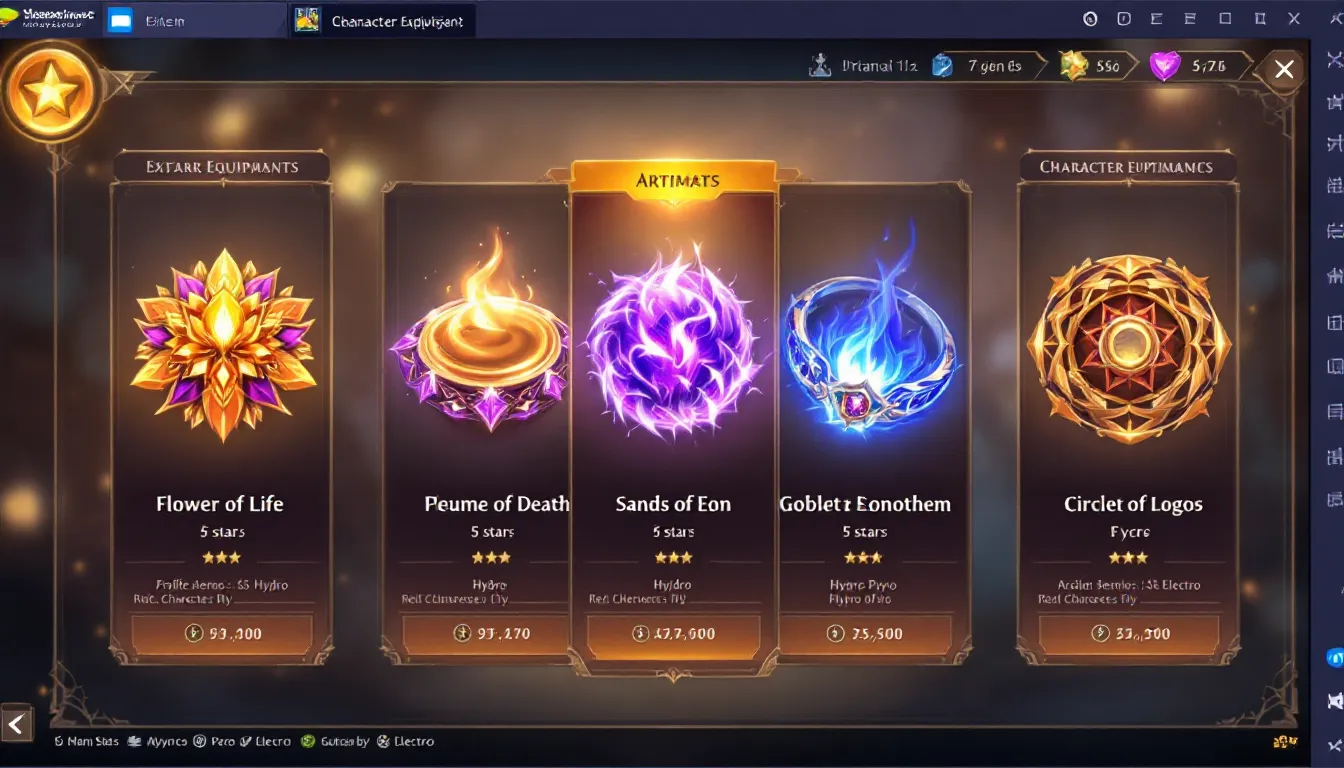
Artifact Sets For Different Playstyles
Two new 4-piece artifact sets arrive with stat distributions that matter. The first emphasizes Elemental Mastery and Crit Rate, bridging a gap between damage and reaction scaling. Its 4-piece effect grants ATK% after triggering elemental reactions, nothing revolutionary, but consistent.
The second set focuses on ER and Elemental Damage Bonus, directly enabling burst-reliant supports. The 4-piece passive makes your elemental burst deal increased damage for 8 seconds after casting it. Stacking multiple instances gets messy, but theoretical damage ceiling is legitimately high if you can arrange enemy grouping.
Both sets compete with established artifact options. Comparing to existing gold standards: the first set challenges traditional ATK/Crit builds for off-field DPS, while the second makes burst-support characters genuinely compete with Emblem of Severed Fate builds. Artifact farming efficiency improves because these sets aren’t strictly better, they’re sidegrades for specific use cases.
Optimization matters here. Players switching to new sets should calculate exact stat thresholds before farming. A character that needed 180% ER with Emblem might only need 160% with the new set, freeing stats for Crit substats. These marginal gains compound across your entire roster.
New Regions And Exploration Content
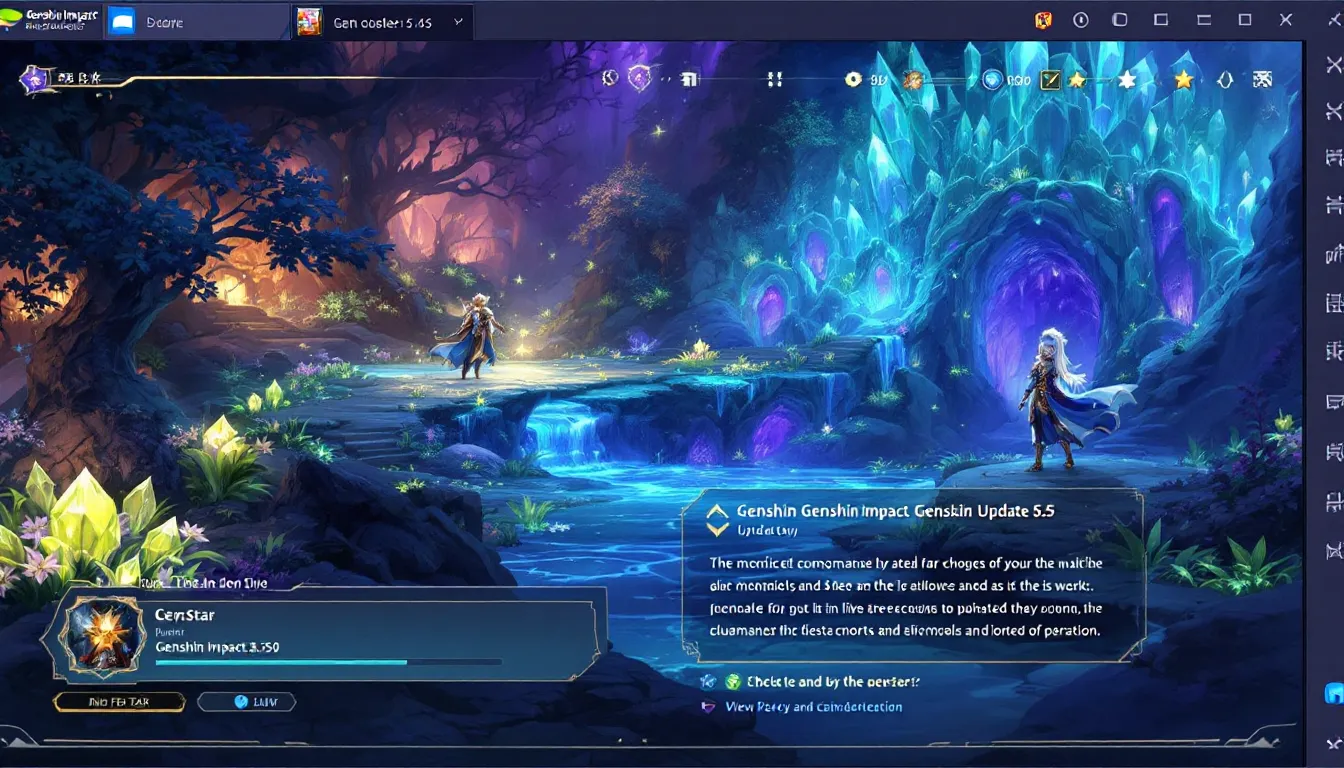
Update 5.5 expands an existing region with a completely new zone that brings exploration hours for completionists. This area introduces environmental mechanics that differentiate it from existing Teyvat zones. You’ll encounter new enemy types exclusive to this region and environmental puzzles that leverage the new mechanic.
The region itself is broken into five named areas, each with distinct visual theming. From bioluminescent forests to crystalline caverns, there’s enough visual variety to make each area feel purposeful rather than repetitive. NPCs in nearby cities provide context through world quests that flesh out regional lore.
Exploration difficulty scales intelligently. Hidden chests requiring elemental reaction combos appear alongside straightforward find-the-obvious-chest situations. Hardcore explorers hunting 100% completion will spend 6-8 hours in this region alone. Casual players can grab major collectibles in 2-3 hours and move on.
Hidden Collectibles And Puzzle Mechanics
Challenge monuments scattered throughout the region require you to defeat enemy waves under specific conditions. Most grant Primogems and Mora, nothing that’ll break your account progression, but enough to make hunting them worthwhile. A few hide major world quests that tie into character backstories.
The new mechanic, let’s call it the Resonance puzzle type, asks you to activate environmental nodes in specific sequences. Standing near nodes while holding specific elements triggers visual feedback. Getting the sequence right opens chests or activates benign platforms that reveal more chests. Initial clues are present in the environment, but a few sequences require external knowledge or trial-and-error.
Hidden shrine doors dot the landscape. These lock behind relatively straightforward combat challenges or interaction puzzles. Rewards include new furniture pieces for your Serenitea Pot and currency used in the regional NPC shop.
Collectibles include 120 new Anemoculi-equivalent objects called region-specific stones. Collecting all 120 requires systematic exploration rather than random luck. Maps exist immediately after patch launch, but discovering them yourself adds exploration depth if you’re running blind.
Enemy Encounters And Challenges
Four new enemy types debut with this region. The first is a ranged elemental unit that applies status effects through projectiles. They’re weak to specific elements, learning the weakness reduces TTK dramatically. Paired with existing enemies, they create scenarios where mono-element teams struggle.
The second enemy type is a heavy melee unit with grab mechanics. Getting caught means interrupted DPS and health loss. Interrupt resistance or out-ranging attacks becomes tactically important. This unit forces positioning discipline rather than standing still for optimal damage.
A mini-boss exclusive to this region appears in one hidden area. It has moderate HP and standard elemental weaknesses, but its attack patterns are aggressive. Learning its tell-based timing is crucial before attempting it underleveled. Clearing it grants 50 Primogems and materials useful for specific character ascensions.
A world boss-tier enemy inhabits the region’s central area. This one is optional, you don’t need to fight it for story progression, but dropping it guarantees rare crafting materials and a Crown of Insight. The fight lasts roughly 5-7 minutes with standard DPS, requiring sustainable team compositions rather than burst-heavy setups.
Team building against new enemies isn’t rocket science, but optimization matters. Players discovering weaknesses before guides release enjoy brief theory-crafting windows where experimentation outweighs following established meta lists. Top Genshin Impact characters remain viable even if they’re not specifically strong against new enemies, game balance is generally tight enough that team quality trumps gimmicky weakness coverage.
Events And Limited-Time Activities
This patch runs five major events across its roughly 43-day duration. Three are combat-focused challenges, one is narrative-driven, and the final one is a cooperation event accessible to lower AR players.
Combat events follow established patterns: clear difficulty tiers, earn stars through performance, unlock progressively better rewards. First-time clear rewards include 60 Primogems per event. Full-star clears award additional materials and battle pass experience. These events are designed to be clearable by mid-game players, though difficulty scaling means endgame players actually have to play optimally.
The narrative event introduces a side story for one of the new characters. It requires minimal combat ability, mostly exploration and dialogue. Completing it gives access to unique furniture and a limited 4-star weapon that’s actually competent enough to use if you’re short on resources.
The cooperation event is legendary. Low AR players can finally jump into high-difficulty content without feeling like dead weight. The event removes standard AR-based restrictions, letting players tackle normally inaccessible domains. It’s genuinely inclusive design, especially valuable for players leveling alternative accounts.
Rewards And How To Maximize Them
Event rewards pool together Primogems, talent materials, weapon materials, artifact materials, and character-specific ascension items. Calculating expected Primogem gains: roughly 420 Primogems from all events combined if you complete them fully. Not Genshin Impact’s largest reward pool, but solid for a patch cycle.
Talent materials drop from specific events. If you’re building characters introduced this patch, you’ll want to farm these events heavily. The materials drop at decent rates, expect 8-12 usable items per full event clear, depending on RNG.
Battle pass experience accelerates significantly with event completion. Finishing all events typically puts you 20-25% through the pass before grinding daily commissions. That’s meaningful time saved if you’re not grinding Ley Lines obsessively.
Prioritization depends on your roster. If you’re running new characters, prioritize events that drop their ascension materials. If you’re strengthening existing characters, grab talent books. Weapons materials are lowest priority, only farm them if you’re prepping weapons for upcoming characters you’re guaranteeing.
Coop events reward everyone equally, so there’s no penalty for bringing undergeared characters. Actually, doing these runs with new players and gearing them up creates a positive community experience. Don’t skip the cooperation events even if you’re endgame, the materials stack regardless.
Quality-Of-Life Improvements
Update 5.5 contains more QoL updates than usual. HoYoverse is clearly listening to feedback, implementing changes that make daily play smoother without affecting progression balance.
The first major improvement is expanded fast travel points. Adding 12 new waypoints across the world, especially in the new region, reduces tedious running. Teleporting directly to domain entrances saves seconds that compound across dozens of runs. It’s a small change with massive quality-of-life impact.
Domain UI now shows enemy types before entering. This lets you swap artifacts and weapons if you need specific coverage before committing to a run. Previously, you’d discover energy drains or interrupt-heavy enemies mid-run, forcing uncomfortable repositioning. Now you prepare accordingly.
Inventory management improved with new sorting filters. Ascending artifacts by rarity, main stat, or set type takes three taps instead of manually scrolling. Weapon sorting by level and rarity reduces farm-ready loadout setup time. Seemingly minor, but inventory management is legitimately tedious in Genshin, and these filters help.
Performance Updates And Bug Fixes
Console performance got attention. PS5 stability improved, fewer frame drops during intensive combat with multiple visual effects firing simultaneously. The game runs at locked 60fps in most situations now, though reflective surfaces still cause occasional dips.
Mobile optimization is solid. iOS and Android clients see reduced load times and battery drain optimization. The game still crushes phone batteries if you’re playing continuously, but drain improved noticeably. Overheating on extended play sessions reduced significantly on mid-range devices.
PC performance scaling improved for low-end systems. Minimum spec machines now maintain 30fps consistently instead of dropping below during busy combat. High-end PCs continue getting 120fps locks where previously uncapped framerates caused stuttering.
Bug fixes target long-standing issues. Character clip-through-terrain problems addressed. Voice line audio sync issues fixed, dialogue audio now matches character animations precisely. Physics-based glitches involving Kazuha’s wind currents and Venti’s vacuum resolved completely.
Loadout saving received massive improvements. Players can now save five complete character loadouts (weapons, artifacts, talents, enemy resistance info) and swap between them instantly instead of manually adjusting every piece. This alone saves 5-10 minutes per domain farming session once you’ve set it up correctly. Recent Genshin Impact guides should mention this feature prominently because it fundamentally changes how efficiently players farm.
Battle Pass And Progression Changes
The Battle Pass received structural updates while maintaining the pricing model. Free Pass tier counts increased from 30 to 40 tiers, giving free players roughly 200 additional Primogems if they fully complete it. The premium pass (called Gnostic Chorus) now includes a monthly weapon material selection, you can pick which ascension material you want instead of taking what drops.
Daily tasks adjusted for balance. Quests now include more variety instead of identical objectives rotating daily. Combat quests mix with exploration tasks, requiring diverse playstyles instead of pure combat grinding. This keeps daily progression from feeling repetitive across the three-month battle pass cycle.
Weekly challenge rewards shifted. Materials got slightly buffed, but the main change is added Mora payouts. Weekly challenges now grant 50,000 additional Mora across all four challenges, enough to cover meaningful talent leveling or equipment enhancement without breaking game economy.
Progression acceleration continues with adjustments to experience requirements. Character leveling from 80 to 90 costs less materials than previously. Ascending weapons from 80 to 90 similarly reduced requirements. These changes let players experiment with max-level gear without full-blown grinding marathons.
Tier Rewards And Farming Strategies
Battle Pass tiers 1-20 contain mostly Mora and enhancement materials. Prioritizing these tiers is worthless if you’re already Mora-capped and overflowing with materials. Skip tier rewards that don’t serve your current progression goals.
Tiers 21-30 contain the first notable Primogem rewards and the monthly weapon material chest. These tiers warrant play time investment. Grinding to tier 30 guarantees 680 Primogems plus guaranteed materials for weapons you actually use.
Tiers 31-40 are premium-exclusive on the free pass. The paid pass provides these tiers to all players. Tier 40 includes 320 additional Primogems, making the premium pass pay for itself twice over if you value Primogems. Whether premium pass justifies cost depends on individual budgets.
Farming strategy depends on play time available. Hardcore players finish the battle pass in weeks. Casual players with 30-60 minutes daily will finish naturally by season end without forced grinding. The 40-tier structure accommodates both playstyles better than previous 30-tier systems.
Weekly challenges grant most experience per-task-time-invested. Prioritizing those over daily commissions speeds progression significantly if you only have 20-30 minutes available. Running two weekly challenges yields identical progression to spending 45 minutes on daily commissions.
Battle Pass progression is entirely PvE-focused, no competitive ranking necessary. You won’t fall behind by taking week-long breaks. Even skipping a full week means catching up with a few intensive grind sessions before the pass ends. Recent Genshin Impact strategies emphasize this flexibility as a strength compared to battle passes in competitive games where timing matters.
Conclusion
Update 5.5 is legitimately meaty. Between two viable characters, meaningful artifact and weapon additions, fresh exploration content, and practical quality-of-life improvements, there’s enough substance for players across all engagement levels. New players have fresh things to learn without feeling overwhelmed. Veterans get endgame challenges and optimization puzzles that keep theorycrafting alive.
The character balance doesn’t completely shatter existing meta, it reshapes it. New characters fit into established team archetypes rather than replacing entire compositions. This means your investment in previous characters remains valuable. Weapons similarly sidestep power creep by offering specialized stat distributions instead of strict upgrades.
Exploration content provides hours of engaging content without mandatory grinding. Hidden areas feel like actual discoveries instead of decoration. Environmental puzzles force engagement rather than pure combat or item collection. Coverage from outlets like Siliconera and Twinfinite suggests the community is equally excited about non-combat additions.
Quality-of-life improvements indicate HoYoverse is listening to long-standing feedback. Fast travel expansion, loadout saving, and inventory management improvements compound into meaningful time savings. These aren’t flashy features, they’re the backbone of accessible game design.
Battle Pass restructuring with 40 tiers and more varied daily tasks shows commitment to player accessibility. Free-to-play players gain meaningful rewards while spenders get genuine value additions beyond cosmetics. The economy remains stable without feeling stingy.
Players jumping into Update 5.5 should prioritize hitting the new region’s exploration milestone, running events for resource dumps, and testing new characters in low-stakes domains before committing resources to full builds. Your experience will vary based on roster state, but the patch accommodates varied playstyles without forcing specific team compositions or characters. Resources from sites like Gematsu covering patch releases confirm timing, hitting the server reset ensures you’re not left behind if you’re planning significant progression this cycle.
The next patch preview suggests balance adjustments and story progression will continue building on 5.5’s foundation. For now, enjoy the content, experiment with new mechanics, and don’t stress optimal builds immediately. The game’s forgiving enough that learning as you play remains viable.