Visions are the lifeblood of Genshin Impact’s combat system. If you’ve spent any time in Teyvat, you’ve noticed that every character wields one, and those glowing elemental orbs aren’t just for show. They determine how your character deals damage, what reactions they trigger, and whether they fit into your team comp at all. Understanding Genshin Impact visions isn’t optional if you want to progress past mid-game content, especially in the Spiral Abyss where element-specific challenges can completely shut down poorly built teams. Whether you’re pulling for your next 5-star or trying to figure out why your damage feels flat, the answer almost always traces back to vision mechanics and elemental synergy. This guide breaks down everything you need to know about visions in Genshin Impact, from the seven elements themselves to advanced team-building strategies that’ll make your spiral abyss runs smoother.
Table of Contents
ToggleKey Takeaways
- Genshin Impact visions are essential supernatural artifacts that determine your character’s elemental abilities, combat reactions, and team synergy—understanding them is crucial for progressing beyond mid-game and excelling in the Spiral Abyss.
- The seven elements—Pyro, Hydro, Electro, Cryo, Anemo, Geo, and Dendro—each enable unique reactions and playstyles, with Hydro and Dendro visions currently dominating the meta through superior reaction multipliers and flexibility.
- Elemental reactions like vaporize (Pyro + Hydro), melt (Cryo + Pyro), and hyperbloom (Electro + Dendro + Hydro) multiply damage output dramatically, making reaction-focused team building far more effective than single-element teams.
- Strategic vision selection based on your playstyle matters more than rarity: a well-built 4-star Hydro support outperforms a mediocre 5-star, and team composition trumps individual character strength.
- Meta viability shifts monthly with Abyss rotations and character releases—prioritize checking current guides before investing in vision-specific builds rather than following static tier lists.
What Are Visions in Genshin Impact?
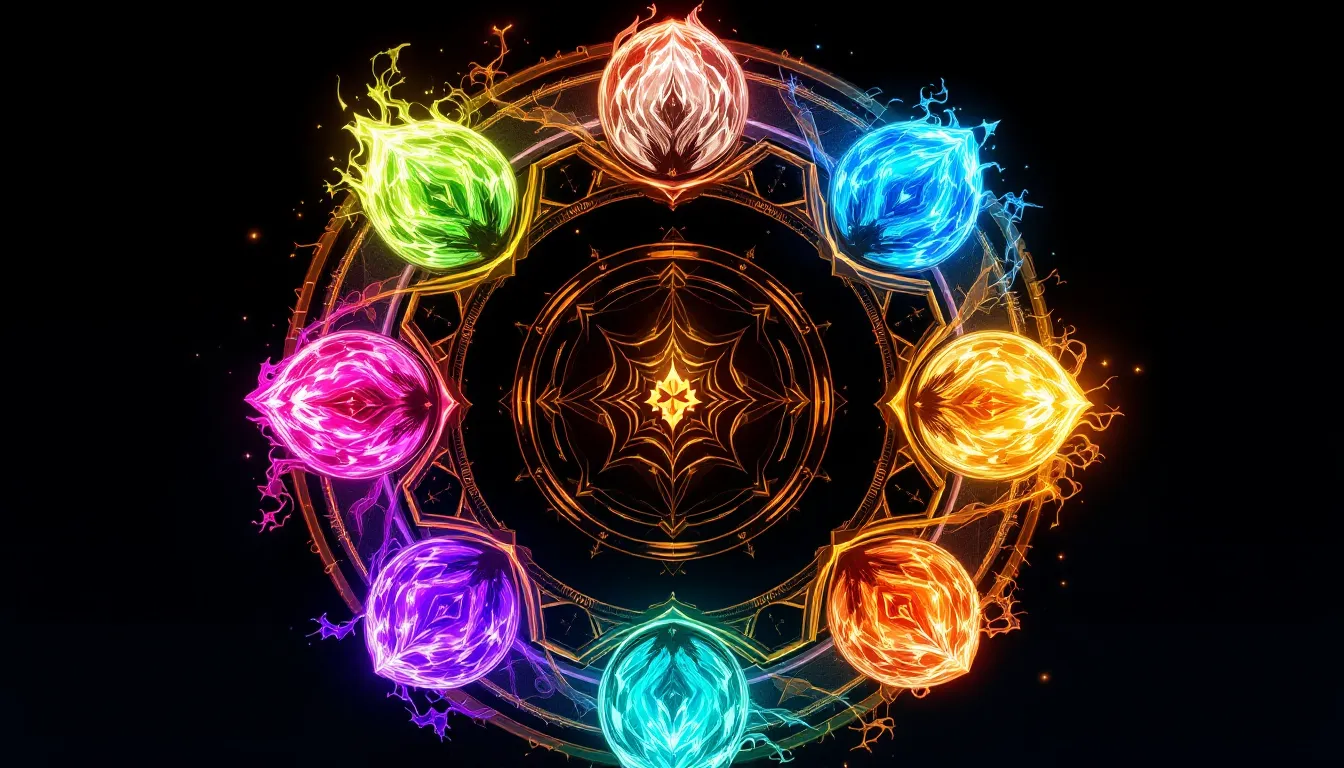
A Vision is a supernatural artifact that grants a person the ability to manipulate one of seven elements in Genshin Impact. Think of it as the character’s core power source, without it, they’re just a regular person swinging a sword. Each Vision corresponds to one element: Pyro, Hydro, Electro, Cryo, Anemo, Geo, or Dendro.
In gameplay terms, a character’s vision determines their ability kit, which skills they can use, and how they interact with the environment. A Pyro vision user can ignite oil slicks and burn grass. A Hydro vision user can freeze enemies when combined with Cryo. An Anemo vision user can create wind currents to glide higher. The vision isn’t just flavor, it’s mechanically tied to your playstyle.
Rarity also matters here. Characters come in 4-star or 5-star tiers, and rarer characters typically have better stats and more powerful kits. But rarity doesn’t always equal viability. A well-built 4-star Hydro support can carry you further than a mediocre 5-star DPS. The key is understanding how your vision-wielder fits into your broader team strategy.
Every character in the game has exactly one vision. You can’t swap elements on a character, so picking the right element for your needs before pulling or building is crucial. That’s why knowing the strengths and weaknesses of each vision type directly impacts how far you’ll get in end-game content.
The Seven Elements and Their Vision Types
Genshin Impact’s seven elements form the foundation of combat strategy. Each one brings distinct strengths, weaknesses, and reactions to the table.
Pyro Vision: The Flame Element
Pyro is the offensive powerhouse. Characters wielding Pyro visions excel at raw damage output and triggering vaporize reactions, one of the highest multiplier reactions in the game. When Pyro meets Hydro, vaporize amplifies Hydro damage by 1.5x (or 2x if Pyro is applied second). This makes Pyro supports absolutely critical for Hydro DPS carries like Hu Tao and Neuvillette.
Pyro’s other key strength is overload with Electro, which deals AOE damage and can break certain enemy shields. Burning with Dendro creates continuous damage over time. On the exploration side, Pyro users ignite torches, burn obstacles, and can traverse some fire-puzzle areas other elements can’t access.
The downside? Pyro users struggle against Hydro-heavy enemies and cryo-resistant bosses. In the Spiral Abyss, when enemy lineups counter Pyro teams, you’ll feel the damage loss immediately.
Hydro Vision: The Water Element
Hydro is arguably the most versatile element in 2026. It enables vaporize, freeze (with Cryo), bloom reactions (with Dendro), and electrocharged (with Electro). Top-tier Hydro DPS characters like Neuvillette and Hu Tao are perpetual meta staples because the reactions they enable are simply too strong.
Hydro vision holders also excel at clipping elemental auras off enemies and starting reaction chains that smaller DPS can’t initiate alone. Many Hydro characters serve dual roles as both DPS and sub-DPS, making them incredibly efficient in team slots.
On exploration, Hydro users can solve water-based puzzles, freeze certain surfaces for traversal, and put out fires. The element feels less restrictive than Pyro in overworld navigation.
Electro Vision: The Lightning Element
Electro has undergone the most dramatic shifts since the game’s launch. Early on, Electro was considered weak, reactions like overload and electrocharged had limited usefulness. The 3.0 update changed everything by introducing aggravate (Electro + Dendro) and hyperbloom (Electro + Dendro + Hydro), making Electro suddenly viable and even dominant in certain team archetypes.
Aggravate rewards Electro DPS characters with massive crit damage bonuses against dendro-afflicted enemies. Hyperbloom lets Electro sub-DPS trigger blooms for consistent off-field damage. Characters like Fischl and Kazuha became meta fixtures overnight.
Electro’s weakness is cleansing. Certain domain enemies resist Electro reactions, and some Abyss lineups specifically counter Electro teams. When Electro isn’t the answer, it really isn’t.
Cryo Vision: The Ice Element
Cryo is the control element. When combined with Hydro, Cryo triggers freeze, which locks enemies in place for upwards of 10 seconds. This defensive utility is invaluable in high-difficulty content where avoiding damage matters as much as dealing it.
Cryo also enables melt (with Pyro), which multiplies Cryo damage by 1.5x, perfect for Cryo DPS characters like Ayaka and Ganyu. The freeze + melt combination makes Cryo DPS phenomenal in certain team compositions.
On exploration, Cryo users create ice platforms for traversal, solve ice puzzles, and slow down enemies during overworld combat. Cryo’s utility outside combat is comprehensive.
The tradeoff? Freeze relies on having Hydro applicators, which narrows team flexibility. Pure Cryo DPS builds without reaction synergy underperform.
Anemo Vision: The Wind Element
Anemo is the grouping and support element. Anemo vision users generate elemental particles that recharge their teammates’ energy, enabling faster ultimate rotations. Characters like Kazuha and Fischl’s Anemo counterpart Venti become irreplaceable in team comps because their grouping and battery effects multiply the value of your DPS.
Venti specifically can gather up to 8 enemies into a single vortex, trivializing some encounters entirely. Kazuha boosts elemental damage for the entire team while providing grouping. These utilities aren’t “nice to have”, they’re build-enablers.
Anemo also reduces resistance to other elements, stacking additively with artifact sets and other sources. This makes Anemo versatile in almost any elemental team.
Weakness? Heavy enemies and large bosses can’t be grouped, reducing Anemo’s contribution. Anemo as a direct damage dealer is weak compared to other elements.
Geo Vision: The Earth Element
Geo is the selfish element. Geo vision users create shields, deal consistent damage through constructs, and don’t rely on other elements for reactions (though they can resonate with Cryo, Hydro, or Electro for crystallize shields).
Characters like Zhongli and Albedo enable entirely different playstyle archetypes. Zhongli’s universal shield is so powerful that the meta sometimes revolves around building teams around his presence. Albedo provides off-field damage that doesn’t interrupt rotation timings.
Geo’s downside is isolation. Geo teams typically don’t synergize with Pyro, Hydro, or Electro reaction teams, forcing you to build pure Geo teams or pair Geo characters with flexibility slots. This makes Geo feel restrictive compared to reaction-dependent elements.
Dendro Vision: The Nature Element
Dendro is the newest element (added in patch 3.0 and expanded since). It unlocked entirely new reaction systems, bloom, aggravate, and hyperbloom, that instantly shifted the meta. Many players consider Dendro the strongest element in 2026 because the reactions it enables are mathematically superior to older reaction systems.
Dendro application is both a strength and weakness. Some Dendro sub-DPS characters apply Dendro so effectively that they enable multiple reaction chains simultaneously. This power makes them essential for reaction-focused teams.
Dendro’s weakness is niche applicability in pure damage scenarios without reaction synergy. Dendro DPS characters need the right teammates to shine. Standalone, Dendro can feel underwhelming.
Each element brings unique strengths to team composition. The best players understand not just what each element does, but when to deploy them strategically.
How Vision Mechanics Work in Combat
Understanding how visions translate into combat mechanics separates casual players from those clearing Spiral Abyss consistently.
Elemental Reactions and Their Effects
Elemental reactions trigger when two different elements touch the same enemy. The order matters, which element is applied first changes the reaction type and damage multiplier.
Vaporize (Pyro + Hydro) multiplies Hydro damage by 1.5x (or 2x if Pyro is applied first, then Hydro follows). This is the highest single-reaction multiplier in the game and why Hu Tao deals so much damage.
Melt (Cryo + Pyro) works similarly, multiplying Cryo damage by 1.5x (or 2x in reverse order). Ganyu leverages melt reactions to achieve absurd damage numbers.
Freeze (Cryo + Hydro) doesn’t boost damage but locks enemies in place for up to 10 seconds, preventing them from acting. In high-difficulty content, crowd control often matters more than raw DPS.
Overload (Pyro + Electro) deals AOE damage and launches enemies. Useful for breaking shields and grouping, but the knockback can scatter enemies annoying at times.
Electrocharged (Hydro + Electro) applies a persistent on-field damage debuff to the enemy. Multiple Hydro/Electro applications stack the damage multiplier, making electrocharged stronger with more elemental triggers.
Bloom (Hydro + Dendro) creates Bountiful Cores on the ground. Walking over them triggers AOE damage. Hyperbloom happens when Electro touches a Bountiful Core, transforming it into a projectile that deals massive single-target damage.
Aggravate (Electro + Dendro) boosts Electro damage by 1.15x per aggravate stack against dendro-afflicted enemies. Electro DPS characters like Fischl go wild in aggravate teams.
Burnhim (Pyro + Dendro) creates continuous damage over time. Not as powerful as other reactions but useful for chip damage and breaking through shielded enemies.
Crystallize (Geo + any element) creates element-specific shields. Geo support characters use crystallize to keep the team safe while dealing damage.
Reaction damage scales with character levels, elemental mastery, and the triggering character’s offensive stats. A support with high elemental mastery and good trigger frequency will deal more reaction damage than a high-ATK DPS with low elemental mastery.
Building Teams Around Vision Types
Successful team composition requires understanding synergy. Most meta teams in 2026 follow one of these archetypes:
Reaction-Focused Teams prioritize elemental reactions. Vaporize teams pair Hydro DPS with Pyro sub-DPS. Freeze teams stack Cryo and Hydro applicators. These teams require careful elemental application ordering and often feel “tight”, every character serves a specific role.
Reaction-Agnostic Teams ignore reaction multipliers and instead focus on raw damage output, crowd control, or utility. Pure Geo teams with Zhongli, Albedo, and two flex DPS ignore reaction mechanics entirely and win through shield durability and sustained damage.
Hybrid Teams blend both approaches. A Hydro DPS with Pyro support benefits from vaporize while also having utility through crowd control or healing. These teams feel more flexible and forgiving than pure reaction teams.
The meta shifts seasonally as new characters release and Abyss lineups rotate. What’s optimal this rotation might be suboptimal next rotation when enemy lineups change. This is why Youngbow’s Genshin Impact Trends 2026 resource proves valuable, it tracks which elements and teams perform best against current challenges.
Vision Rarity and Character Acquisition
Not all visions are created equal. Rarity, availability, and distribution matter significantly for team building.
Understanding Vision Distribution
Rarity in Genshin Impact comes in two tiers: 4-star and 5-star. Four-stars are common. They drop frequently from wishes and free-to-play players can reasonably expect to build multiple 4-star teams. Five-stars are rare, pulling one typically requires 50-100+ wishes on limited banners.
But, distribution across elements is uneven. Some elements have more 4-star options than others. Hydro and Cryo have deep 4-star rosters with viable sub-DPS characters at every power level. Geo and Dendro have fewer 4-star options, making 5-stars more necessary.
This affects accessibility. New players can build functional Hydro teams with 4-stars like Barbara and Xingqiu. Building a pure Dendro team without 5-stars is significantly harder.
Character reruns follow a cycle. Popular 5-stars rerun every 6-9 months. If you missed Hu Tao during her banner, you’ll get another chance eventually. Patience is a resource.
Banner Systems and Vision-Specific Pulls
Genshin Impact’s gacha system works through “wishes.” Standard wishes pull from the permanent pool. Limited character banners guarantee the featured 5-star within roughly 100 wishes. Weapon banners offer signature weapons for specific characters.
Vision type doesn’t appear in banner descriptions, but smart players track which limited 5-stars have which visions. If Abyss this rotation demands strong Pyro DPS, waiting for a Pyro 5-star limited banner makes more sense than wishing on unrelated elements.
Pity mechanics reset when you pull a featured 5-star. This means budgeting wishes strategically, don’t blow all your pity on a weaker unit when a stronger one might release next month. Checking reliable guides and character tier lists before wishing saves regret.
Free-to-play players can expect roughly 50-60 wishes per patch (5 weeks). This means you’ll likely hit soft pity (70+ wishes) once every patch or two, roughly one featured 5-star per 2-3 months. Budgeting across that timeline prevents wishless periods.
The Lore Behind Visions in Genshin Impact
Beyond mechanics, visions carry narrative weight in Teyvat’s world.
Divine Gifts and Celestial Power
In lore, visions are granted by Celestia (a floating island civilization) to mortals who demonstrate exceptional will and ambition. They’re not earned through training, they’re gifts from divine forces. Only mortals “worthy” receive visions, making them rare across the world.
This creates an interesting lore consequence: vision holders are inherently special. They’re chosen by powers beyond normal understanding. The games hints throughout the story that Celestia has motives beyond simply empowering humanity. Characters like the Traveler and Dainsleif question whether visions are gifts or tools for celestial manipulation.
Each element’s vision carries thematic weight matching character archetypes. Pyro visions go to passionate individuals. Cryo visions go to those seeking control. Anemo visions go to those who value freedom. Dendro visions go to seekers of knowledge and growth.
Character Backstories and Vision Acquisition
Every playable character has a vision-acquisition story tied to their personal journey. Hu Tao received a Pyro vision while processing grief over her grandfather’s death. Ganyu received a Cryo vision during existential crisis about her dual nature as adeptus and human. These aren’t random, the vision reflects the character’s emotional state and values.
Genshin’s narrative design ensures that a character’s vision feels thematically inevitable by the time you complete their story quest. The element isn’t arbitrary, it means something about who they are.
This thematic approach makes vision selection feel less like menu-picking and more like discovering character identity. A new player might not realize that every vision type connects to deeper narrative implications about Teyvat’s world and celestial politics.
Best Visions for Different Playstyles and Roles
Determining the “best” vision requires understanding what role you’re filling.
Damage Dealing and Reaction Damage
For pure DPS, Pyro and Hydro dominate. Pyro DPS excel through vaporize multipliers, Hu Tao consistently ranks top-tier DPS for a reason. Hydro DPS have more flexibility, working in vaporize, freeze, or bloom teams. Recent Hydro DPS releases like Neuvillette outscale older DPS through reaction mechanics and personal multipliers.
Cryo DPS (Ganyu, Ayaka) compete through freeze utility and melt multipliers. They’re slightly more dependent on support characters to enable reactions, but the crowd control makes them irreplaceable in specific scenarios.
Electro DPS benefit from aggravate, turning Electro into a viable reaction-dependent archetype. Fischl’s off-field Electro application and Clorinde’s onfield Electro DPS showcase what happens when Electro teams build around modern reaction systems.
Geo DPS deal impressive damage through construct stacking and personal multipliers, ignoring reactions entirely. They feel “weaker” only because they can’t leverage reaction multipliers, but raw DPS numbers sometimes match or exceed reaction-dependent characters.
Anemo and Dendro aren’t viable as dedicated DPS. Anemo works purely as support/sub-DPS. Dendro enables reactions rather than triggering them as DPS.
For reaction damage specifically, Dendro support characters are cracked. Nahida’s Dendro application triggers hyperbloom and aggravate constantly. She’s essentially guaranteed in any reaction-focused team that touches Dendro.
Support and Healing
Hydro healers (Barbara, Kokomi) enable freeze teams while providing sustain. Kokomi specifically enables freeze DPS through thrall application, making her nearly mandatory for freeze team consistency.
Cryo supports don’t exist in traditional form. Cryo sub-DPS support like Diona provide healing + grouping utility.
Pyro supports are critical for Hydro DPS teams. Bennett provides ATK buff and healing. Kazuha’s Anemo off-field vaporize application enables reaction chains. Wait, Kazuha’s Anemo, let me reconsider.
Anemo support characters (Kazuha, Venti, Wanderer) provide grouping, elemental bonus, and energy battery effects. They’re the most universally useful support vision type because their buffs stack additively and their mechanics work in almost any team.
Geo supports create shields (Zhongli) or sub-DPS off-field damage (Albedo). Zhongli’s universal shield means he’s optional in most teams but a comfort pick for learning new content. Experienced players sometimes skip him.
Dendro support (Nahida) enables reaction-focused Dendro teams. Electro supports (Fischl, Kazuha’s Electro counterpart applicators) enable electrocharged and hyperbloom.
Tanking and Defense
Only Geo and Anemo excel at pure defense. Zhongli (Geo) creates universal shields that block damage from any element. His shield duration is so long that enemies barely touch the active character. Tanks aren’t necessary for experienced players, but Zhongli trivializes learning curves.
Cryo provides crowd control through freeze, which is defensive in effect even if not mechanical defense. Frozen enemies can’t attack.
Anemo provides grouping utility. Enemies clustered together are easier to manage than scattered enemies. Venti’s crowd control is defensive in the same way freeze is.
No other elements provide meaningful defensive mechanics. If you’re taking damage in endgame, you either need shields (Geo), crowd control (Cryo/Anemo), or better positioning. Elemental choice alone doesn’t solve defensive problems, team composition does.
Vision Tier Lists: Meta Rankings by Element
Ranking visions by meta viability is tricky because viability shifts with Abyss lineups, but here’s the 2026 consensus:
S-Tier (Mandatory): Hydro and Dendro. Hydro’s reaction flexibility and top-tier DPS options make it irreplaceable. Dendro’s recent additions have made it equally essential. Every serious account needs strong Hydro and Dendro teams.
A-Tier (Strongly Recommended): Cryo and Anemo. Freeze teams carry players through most content. Anemo support unlocks DPS potential through buffs. Both are nearly mandatory for Abyss consistency.
B-Tier (Situationally Powerful): Pyro and Electro. Pyro carries specific DPS archetypes (vaporize). Electro has fallen in and out of favor but remains viable in aggravate/hyperbloom teams. These are niche answers, not universal solutions.
C-Tier (Niche): Geo. Zhongli’s shield is comfort, not necessity. Pure Geo teams exist but require specific character investments. Geo works excellently when you build around it but doesn’t enable the same reaction flexibility as other elements.
This tier list applies only to meta viability in difficult content. For casual play, story content, and overworld exploration, all elements are perfectly viable. The tier list assumes you’re trying to clear Spiral Abyss efficiently with limited resources.
Tier placement changes frequently. When Abyss featured Pyro-resistant enemies heavily, Pyro dropped to C-tier temporarily. When new Dendro DPS released, Dendro tier rose. Check current Abyss guides and character tier lists monthly to stay updated.
Conclusion
Visions in Genshin Impact are far more than visual flavor. They determine how you damage enemies, what reactions you enable, which content you can clear, and how efficiently you progress. Understanding that Hydro visions unlock vaporize mechanics, that Dendro visions enable hyperbloom reactions, and that Anemo visions provide universal buffs transforms how you approach team building.
The seven elements each offer distinct playstyles. Pyro vision users hit hard through direct damage multipliers. Hydro users adapt to almost any situation. Cryo users control fights through crowd control. Electro users leverage aggravate for consistent high damage. Anemo users enable faster rotations through battery effects. Geo users ignore reactions entirely and shield through content. Dendro users trigger the game’s newest and most powerful reaction systems.
In 2026, the meta heavily favors Hydro and Dendro visions, their flexibility and reaction multipliers are mathematically superior. Cryo and Anemo fill essential support roles. Pyro, Electro, and Geo work excellently in niche scenarios.
But remember: tier lists shift monthly. Check current Abyss layouts before committing to vision-specific builds. The best vision is the one that matches your team needs and playstyle. If you enjoy grouping enemies, invest in Anemo. If you prefer reaction-focused gameplay, stack Hydro or Dendro. If shield-based safety appeals to you, commit to Geo.
Genshin Impact rewards strategic thinking and flexibility. Master the mechanics, understand your visions’ strengths and weaknesses, and adapt when content demands it. That’s how you transition from casual exploration to serious Abyss-clearing gameplay.