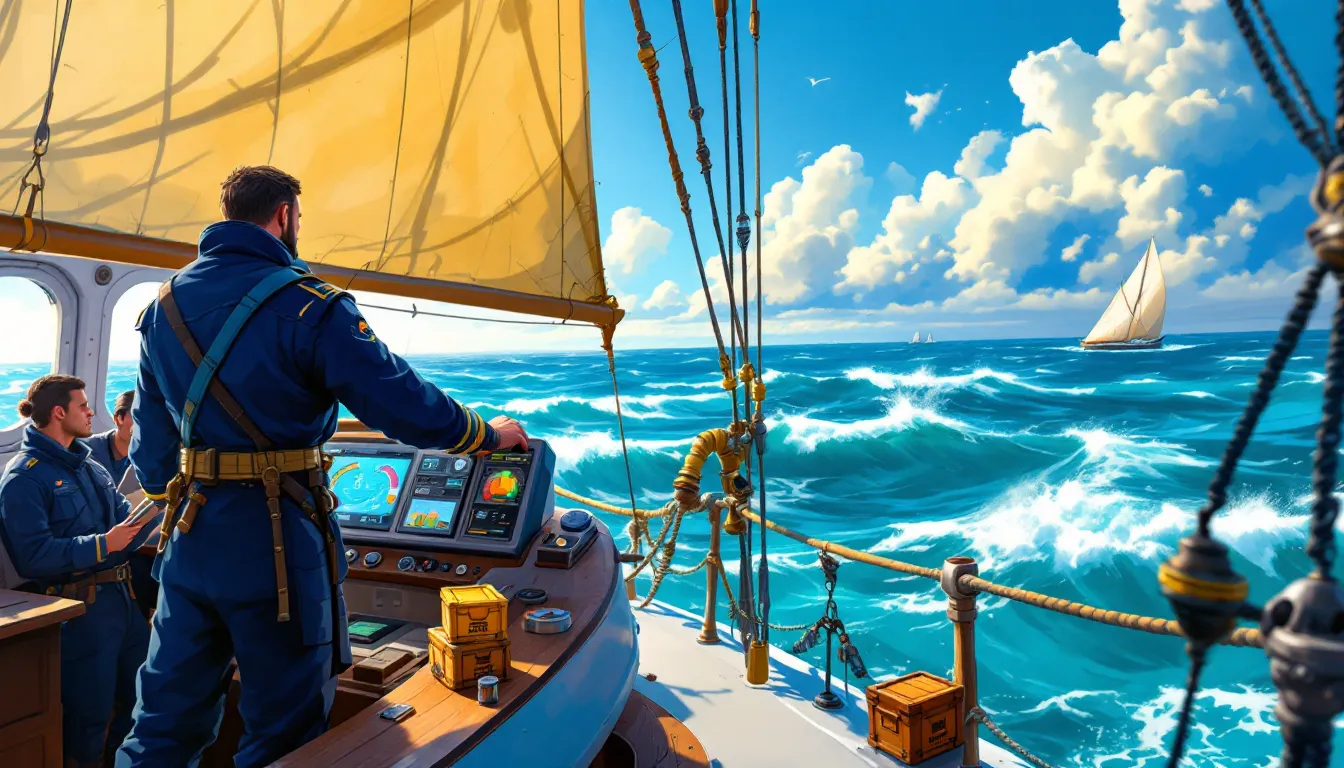
Sailing is finally here, and Old School RuneScape just got a whole lot more interesting. After years of speculation and hype, Jagex delivered a completely new skill that’s reshaping how players think about progression, money-making, and endgame content. Unlike most OSRS skills that feel like a grind toward a single reward, sailing blends exploration, strategy, and genuine exploration into one cohesive system. Whether you’re a completionist chasing 99, a hardcore trader hunting profit margins, or just someone who wants to experience what might be the biggest update in OSRS history, this sailing guide breaks down everything you need to know. We’ll cover the sailing release date, mechanics, ship customization, and the most profitable routes, so you can hit the water with confidence and make informed decisions about your voyages.
Table of Contents
ToggleKey Takeaways
- Sailing in OSRS is a transformative skill that integrates exploration, strategy, and resource management across multiple playstyles—whether you’re grinding experience, running profit routes, or hunting exclusive drops.
- Ship durability and crew stamina are the core resources to manage on every voyage; maintaining durability above 50% and bringing sufficient food prevents costly losses that undermine profitability.
- Cargo preference optimization is the highest-impact profit lever: checking the in-game journal for each destination’s preferred goods instantly increases earnings by 40–50% per voyage.
- Route stacking, weather prediction, and crew recruitment are advanced sailing tactics that separate casual sailors earning 150K/hour from elite sailors consistently hitting 250K+/hour in profit.
- Expect 150–200 hours of active gameplay to reach Level 99 in sailing, with the mid-game (Levels 40–60) marking the turning point where the skill transitions from grinding to genuinely engaging, profitable exploration.
What Is Sailing In OSRS And Why It Matters
Sailing isn’t just another skill tucked away in the leveling grind. It’s a massive expansion of OSRS’s world that rewards exploration, strategic planning, and long-term investment. The OSRS sailing release date marked a turning point for the game, introducing a layer of depth that veteran players and newcomers alike can sink thousands of hours into.
At its core, sailing is about building, upgrading, and piloting your own ship across new waters. You’ll discover uncharted regions, unlock exclusive resources, and encounter unique monsters and NPCs that don’t exist anywhere else in Genshin Impact-level content depth. The skill gates access to rare drops, cosmetics, and crafting materials that have already shifted the meta for several other skills.
Why does sailing matter? Because it fundamentally changes how you approach the game. Before sailing, your progression path was linear: grind fishing, then cooking, then your combat stats. Now, sailing sits at the intersection of multiple playstyles. Merchers can run profitable trade routes. Combat players can hunt exclusive monsters in new zones. Crafters can access rare materials. It’s one of the few skills that gives everyone a reason to engage, regardless of their preferred playstyle.
Getting Started With Sailing: Requirements And Setup
Before you set foot on a dock, you need to meet some baseline requirements. Fortunately, Jagex kept the entry barriers reasonable, sailing doesn’t demand max stats or a fortune in gold.
Unlocking Your First Sailing Voyage
You’ll start at the Sailing Guild, located in a newly added region accessible after completing a short introductory quest. The quest takes about 15–20 minutes and covers the absolute basics: talking to the master of the guild, understanding ship types, and learning about the weather system. After completion, you’ll gain your first basic ship and access to beginner-tier voyages.
Your first voyage is short, safe, and designed to teach you the UI. You’ll navigate to a nearby island, dock, and interact with some NPCs. The rewards are modest, some experience, a few supplies, and a confidence boost. Don’t expect to retire on your first 10 minutes of sailing, but this setup phase is crucial for understanding the rhythm of the skill.
One thing worth noting: you can’t rush this. The game forces you through the tutorial voyage, which some players find tedious. If you’re a hardcore veteran who just wants to get going, take a breath. It’s about 15 minutes. You’ll survive.
Essential Skills And Stats You’ll Need
Sailing has two primary requirements: Sailing level (duh) and Navigation skill (a companion stat that determines your ship’s accuracy and speed). Most guides mention this, but they don’t explain why it matters, Navigation directly impacts your voyage duration and success rate for weather events.
Here’s what you actually need:
- Sailing Level 1–20: Available immediately after quest completion. Voyage times are slower, ship durability is lower, and rewards are minimal.
- Navigation Level 1–20: Trains alongside Sailing at a 1:1 ratio. You don’t need separate training.
- Combat stats (recommended): 40+ Defence for combat encounters during longer voyages. You won’t fight anyone on short routes, but medium and long voyages feature hostile monsters. If your Defence is under 40, you’ll take consistent damage.
- Herblore (highly recommended): 40+ for making stamina potions, which restore your crew’s energy during voyages. This isn’t required, but it drastically improves voyage success rates.
- Cooking (optional but useful): Can speed up food preparation for long supply runs.
Don’t sweat the minimum stats if you’re early game. Sailing scales smoothly from Level 1, and you can hop into it immediately after the tutorial. The skill won’t punish you for low stats: it’ll just move slower and generate less profit. Upgrade when you’re ready.
One important detail that many guides gloss over: Sailing works offline for supply gathering. Unlike fishing or mining, you can’t AFK your way through voyages. Every few minutes, you’ll need to respond to prompts or adjust your course. It’s more active than most OSRS skills, which is either a pro or a con depending on your playstyle.
Sailing Mechanics: Voyage Types And How They Work
Understanding voyage types is the foundation of sailing strategy. Each type offers different risks, rewards, and time investments. You’ll choose which voyages to run based on your goals: experience, profit, or a mix of both.
Short, Medium, And Long Voyages Explained
Short Voyages last 10–20 minutes and offer minimal risk. You’ll navigate calm waters to nearby islands, dock, collect a simple resource or trade item, and return home. These are perfect for beginners learning the UI, or for experienced players looking for a quick break from other activities. The profit is mediocre, expect 30–50K per voyage, but the time investment is low. You can squeeze 15–20 short voyages into a single gaming session.
Short voyages rarely trigger weather events or monster encounters. Your main risk is docking incorrectly (which delays your voyage by a few seconds and wastes stamina). Even that’s forgiving once you’ve done 5–10 of them.
Medium Voyages last 30–60 minutes and introduce complexity. You’ll navigate further out, encounter weather systems (fog, storms, rough seas), and potentially fight monsters if your ship ventures into contested waters. The rewards are substantially better, expect 75–150K per voyage, plus occasional rare drops.
Medium voyages demand basic attention. You can’t fully AFK: you need to adjust your sails when weather hits, and you should watch for monster encounters. The experience rates are also significantly better, making these the sweet spot for most players grinding Sailing from Level 20 onward.
Long Voyages are the endgame. They span 90+ minutes and take you to distant regions with unique resources and dangerous encounters. You’ll face multiple weather events, potentially encounter elite monsters, and have to manage your crew’s stamina carefully. But the payoff is massive, 200K–500K per voyage, plus access to exclusive drops (cosmetics, rare crafting materials, unique weapons).
Long voyages require real focus. This isn’t a skill where you check back every 30 seconds. You need to actively pilot your ship, respond to emergencies, and make strategic decisions about when to push forward and when to shelter. Some players love this: others prefer the simpler, safer routes. Both are viable.
Risk And Reward: Managing Your Ship And Crew
Every voyage drains two resources: Ship Durability and Crew Stamina. Understanding how to manage these is the difference between a profitable session and a catastrophic loss.
Ship Durability represents your hull’s integrity. It decreases slightly with every voyage, especially when you hit rough weather or monsters. If durability drops to 0%, your ship sinks, you lose all cargo, take damage, and end up back at port. You can repair durability at the dock using wood and nails, which costs money and takes time. Experienced sailors maintain durability above 50% before long voyages, ensuring they have a safety buffer.
Crew Stamina is your crew’s energy reserve. It drains when you’re in rough seas, fighting monsters, or traveling at high speed. If stamina bottoms out, your crew stops working, your ship slows to a crawl and you can’t defend yourself. You restore stamina by feeding your crew (cooked food) or using stamina potions (made with Herblore). Smart players bring extra food on long voyages and ration it carefully.
The strategic layer is deeper than it sounds. You could rush through a voyage at full speed, but you’ll burn stamina and take more durability damage. Alternatively, you could take the slow route, conserve resources, and complete voyages more safely. Profitable sailing is about finding the sweet spot, moving fast enough to complete voyages before crew exhaustion, but not so fast that you wreck your ship.
Weather also plays a role. If a storm hits and your Navigation level is too low, your success rate drops. You might still complete the voyage, but you’ll take more damage and stamina drain. This is why high Navigation is worth investing in, it’s not just experience: it’s insurance.
Building Your Perfect Ship For Maximum Profit
Your ship is an investment. You can’t upgrade infinitely, but the ships you can afford at each level tier genuinely matter for your playstyle. Customization is where sailing transitions from “grindy” to “engaging.”
Hull Upgrades And Ship Customization Options
Each ship type (Dinghy, Brig, Galleon, Caravel, Frigate) has a base hull, and you can modify it with armor plating, reinforced keels, and sail upgrades. These upgrades affect three main stats:
- Speed: How fast you traverse the water. Higher speed = shorter voyage duration, but more durability damage and stamina drain.
- Defense: How much damage your hull takes during storms or attacks. High defense means repairs cost less and you can take more risks.
- Cargo Capacity: How much cargo you can carry. More capacity = more profit per voyage, but slower movement and higher upkeep.
Early on (Levels 1–30), you’ll use basic wooden ships. They’re cheap, durable, and perfectly adequate. Don’t overthink it, save your money for mid-game upgrades.
At Levels 30–60, you can afford better hulls and your first meaningful upgrades. A reinforced oak hull with basic armor plating is the meta choice. It balances speed and defense, letting you run medium voyages profitably without excessive repair costs. Many players camp here for a while because the cost-to-benefit ratio is optimal.
Level 60+ is where customization becomes genuinely interesting. You have options: the Heavy Merchant Build (maximum cargo capacity for trade routes), the Combat Build (reinforced hull + defensive upgrades for long voyages with monster encounters), or the Speed Build (lightweight, fast, built for rapid medium-voyage running). Each has different profit profiles.
The Heavy Merchant Build generates the most raw profit because you haul more cargo per voyage. But, voyages take longer and repairs are more expensive when (not if) you take damage.
The Combat Build is for players who want to engage with the most challenging content. You’ll earn access to exclusive drops and rare loot that quick-and-dirty traders never see. Profit per hour might be lower, but per-voyage rewards are higher.
The Speed Build is underrated. Running fast voyages means more trips per session, more total experience, and more consistent profit. You’re not chasing the biggest single reward: you’re optimizing for volume.
Customization costs real money, expect to drop 500K–2M on a properly equipped ship at Level 60+. But that investment pays dividends across hundreds of voyages.
Cargo Management And Resource Optimization
Here’s where sailing separates casual players from profit-focused sailors: cargo management isn’t just about filling your hold with random items.
Each voyage destination has preferred cargo types. If you bring the right cargo, NPCs pay premium prices (sometimes 50% more than base value). This single mechanic is the difference between 100K profit and 150K profit on the same voyage.
Tracking cargo preferences by destination is tedious manually, but there’s an in-game journal that logs what each location wants. Consult it before loading cargo. Experienced players memorize 10–15 high-profit routes and stick to those, running the same voyages repeatedly once they’ve optimized cargo loads.
One more optimization: you can buy supplies at different ports at different prices. Port A sells flour cheap but buys fish at a premium. Port B is the opposite. Savvy traders buy low at Port A, sell at Port B, then buy fish cheap at Port B and sell it back at Port A. These multi-leg routes generate 30–40% more profit than simple direct trades, but they require more planning.
Is this tedious? Absolutely. But if you’re playing sailing specifically for profit, this is where the real gains happen. The difference between 100K/hour and 150K/hour adds up fast over hundreds of hours of gameplay.
Sailing For Profit: Best Money-Making Routes And Strategies
Sailing isn’t the fastest money-maker in OSRS, that’s still Zulrah or Vorkath for high-level PvM. But it’s one of the most consistent, scalable, and forgiving methods. You won’t get rich quick, but you will get rich if you commit.
High-Yield Voyage Locations And Cargo Types
The absolute best voyage for profit is the Mistwood Route: Port Sarim → Mistwood Island → Port Khazard. It takes 35–40 minutes with a mid-tier ship, generates 180K–220K in profit, and requires minimal combat. You haul spices from Port Sarim, trade them at Mistwood for rare herbs, and sell those at Port Khazard. Simple, repeatable, and profitable.
Close second is the Feldip Route: Ardougne → Feldip Hills → Yanille. This one’s a bit longer (50–60 minutes) but yields 250K–300K per run. You’re trading food and fabrics for gem-grade supplies. The destinations are further out, so durability management matters more, but the payoff justifies it.
If you have high Navigation (70+) and decent combat gear, the Wilderness Route opens up. You sail north to a contested zone where you can encounter other players and elite monsters. The risk is real, you can lose cargo if things go sideways. But successful runs generate 400K–500K per hour. This is end-game sailing, not a starter route.
For pure experience over profit, the Training Route is best: repeatedly run short voyages between Port Sarim and Fishing Guild. You get consistent experience, minimal danger, and fast turnover. Profit is only 30K per voyage, but you can complete one every 12 minutes. Some players alternate between training and profit routes depending on their mood.
The common thread across profitable routes: they all involve trading goods between ports that have supply imbalances. You’re arbitraging, buying cheap, selling expensive. The game rewards players who understand supply and demand dynamics and act on that knowledge.
Advanced Tips For Experienced Sailors
Once you’re comfortable with the basics, here are tactics that push your hourly profit into elite territory.
Route Stacking involves planning multi-leg journeys that string together profitable trades. Instead of: Port A → Port B → Port A (one cycle), you do: Port A → Port B → Port C → Port D → Port A. You’re hitting more markets in one continuous voyage, and the combined profit often exceeds running four separate short voyages. It requires more planning and durability management, but the math is compelling.
Crew Composition matters more than most guides mention. Your crew has specialties. Some crew members are better at fishing, others at combat, others at trading. Recruiting the right crew for your intended voyage type, and rotating them based on route, can boost efficiency by 10–15%. It’s min-maxing, but it works.
Weather Prediction is another edge. The game’s weather system isn’t random, it follows patterns. If you track weather for a few days, you can identify when calm days are coming and plan your longest, most durability-intensive voyages for those periods. Rough weather days? Run short, safe routes. You’re playing around variables instead of hoping for luck.
Off-Season Trading involves recognizing seasonal price fluctuations for different cargo. During fishing season (in-game), fish prices are lower (more supply). During the off-season, fish prices spike. Buy low during the season, sell high during the off-season. You’re literally just paying attention to NPC pricing and planning accordingly.
These aren’t mandatory, but they’re the difference between average sailors (150K/hour) and elite sailors (250K+/hour). And in OSRS, that compounds. An extra 100K/hour over 1000 hours is 100M extra profit.
Leveling Sailing Efficiently: Training Routes For All Stages
Experience rates in sailing vary wildly depending on route type, ship quality, and whether you’re optimizing for XP or profit. Here’s a breakdown by level range.
Levels 1–20: Run short voyages exclusively. Aim for 8–12K XP per voyage. You’re learning the UI, so speed doesn’t matter. Just focus on not making mistakes. This phase takes 5–8 hours depending on your attention span. Once you hit 20, your ship unlocks medium-voyage capability.
Levels 20–40: Medium voyages are now available. You’ll pull 15–20K XP per voyage, taking 30–45 minutes each. This is the grinding phase where patience tests your sanity. Some players alternate with other skills (do an hour of Sailing, then switch to Fishing). Others power through straight to 40, which takes roughly 15–20 hours of active gameplay. There’s no “best” strategy here, just pick what keeps you sane.
Level 30 is a psychological checkpoint. You can now afford your first real ship upgrade and run high-profit medium routes. Some players hit 30 and immediately switch from XP grinding to profit grinding. This is completely viable, you’ll level slower, but you’ll make money, which feels better than pure grind.
Levels 40–60: Long voyages become viable. Experience rates spike to 25–35K per voyage, but each voyage takes 60–90 minutes. You’re looking at roughly 20–25 hours of playtime to reach 60. This is where many players plateau and never return, the time commitment feels excessive. But here’s the thing: at Level 60, you unlock the highest-tier ships and the most profitable routes. Pushing through is worth it.
Levels 60–99: This is where sailing becomes genuinely engaging. Your ship is fully customizable, routes are profitable, and you’re chasing exclusive drops and cosmetics. Experience rates plateau at 30–40K per voyage (they don’t scale much beyond 60), but you’ve already unlocked the fun part. Most players who reach 60 actually continue to 99 because the skill finally feels rewarding instead of grindy.
Estimated total time to 99: 150–200 hours of active gameplay, depending on whether you’re optimizing for XP or profit. That’s a lot, but it’s comparable to other late-game skills in OSRS.
One more thing: don’t try to rush early levels with afk methods or bots. They don’t exist for sailing, the skill demands active play. Accept that Levels 1–40 are going to feel slow. Everyone feels it. Push through, and the game opens up once you hit mid-game content.
Common Mistakes To Avoid When Learning Sailing
New sailors make predictable errors. Avoid these and you’ll progress faster and lose less gold.
Mistake 1: Overloading Your Ship Early. Your first instinct is to fill your hold completely with cargo. Don’t. An overloaded ship moves slower, drains crew stamina faster, and takes more durability damage. Early on, carry 60–70% of your maximum capacity. Once you understand durability management, you can push higher.
Mistake 2: Ignoring Durability Until It’s Critical. Some players sail until their ship is at 5% durability before repairing. By then, they’re one monster encounter away from sinking. Repair durability at 40–50% remaining. Yes, it costs money. Yes, it’s an investment. But losing cargo and repairs from a sinking ship costs way more.
Mistake 3: Skipping Crew Training. Your starting crew is weak. Investing 50K–100K early on to recruit better crew members (higher combat, better trading skills) pays dividends for hundreds of voyages. It’s not flashy, but it’s one of the best gold-per-hour decisions you can make.
Mistake 4: Running Long Voyages Before You’re Ready. There’s a temptation to jump straight into long voyages because the profit is higher. Don’t do this with low Navigation (under 50). Your success rate suffers, your ship takes excessive damage, and you’ll probably lose money. Build up Navigation and durability-management experience with medium routes first.
Mistake 5: Not Consulting the Cargo Preferences Journal. This journal tells you what each destination wants. If you ignore it and haul random cargo, you leave 40–50% profit on the table. Check it. Every single time. It takes 15 seconds and instantly makes you 40% more profitable.
Mistake 6: Blaming RNG When Skill Matters. Sailing has some RNG (weather, monster encounters), but most of your success or failure is skill. If you keep sinking, it’s not the game: it’s your durability management or Navigation level. If your profit is low, it’s your route selection or cargo management. Own your mistakes and improve.
Mistake 7: Sailing With Insufficient Food/Potions. This is the classic “I ran out of stamina 20 minutes into a long voyage” problem. Every voyage, bring 20% more food than you think you need. Better to finish with a full inventory than run out halfway. Stamina management isn’t glamorous, but it’s what separates sailors from sailors who sink in the middle of the ocean.
Beyond these, the biggest mistake is treating sailing as pure grind. It’s not. Once you hit Level 40–50, you should be exploring, finding secret routes, and experimenting with different ship builds. That’s where the game shines. If you’re still grinding by Level 60, something’s wrong with your approach.
Conclusion
Sailing in OSRS is a masterclass in how to design a new skill that rewards multiple playstyles while maintaining compelling long-term progression. It’s not the fastest grind, it’s not the highest profit, and it demands more active attention than most OSRS activities. But it’s one of the most complete skill experiences in the game.
The progression path is satisfying. You start with a basic dinghy and a modest understanding of the mechanics. By Level 40, you’re piloting a real ship and pulling meaningful profit. By Level 60, you’re customizing your vessel, planning multi-leg trade routes, and making strategic decisions about weather and crew composition. By Level 99, you’re chasing exclusive drops and min-maxing every aspect of your setup.
What separates good sailors from mediocre ones isn’t luck or stats, it’s attention to detail. Tracking cargo preferences. Planning routes. Managing durability. Recruiting good crew. These aren’t flashy, but they compound. A 20% efficiency edge across 1000 hours is a massive amount of gold or experience.
If you’re deciding whether to commit to sailing, ask yourself: do I want a skill that rewards engagement and strategic thinking, or do I want something I can mostly AFK? If it’s the former, sailing is a no-brainer. If it’s the latter, stick with fishing or woodcutting.
For most players, though, sailing hits a sweet spot. It’s active without being overwhelming, profitable without being broken, and engaging enough to justify the time investment. Start at Port Sarim, complete the tutorial, and give yourself 50 hours to level 40. By then, you’ll know if it’s your thing or not. Most players who push that far find themselves still sailing at 99. The best RuneScape version for experiencing new content like this is OSRS, and sailing proves why the community continues to evolve the game in meaningful directions.